
↓Ceiling fans
HVLS Energy-Saving Fan Product Introduction
1. Product Overview
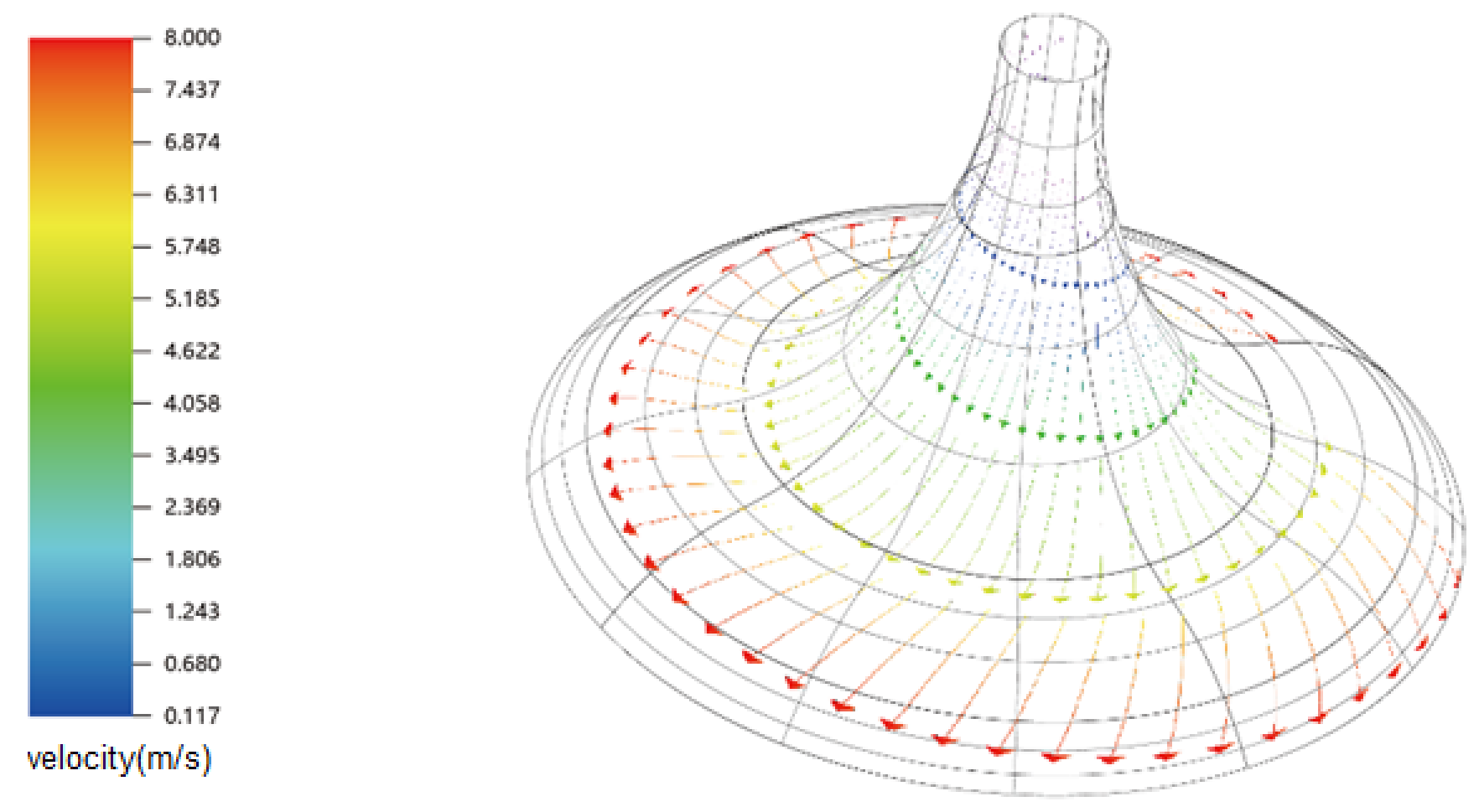
The HVLS (High Volume, Low Speed) energy-saving fan is a large industrial fan with a maximum diameter of 7.3 meters and a power rating of only 1.5 kW. Utilizing aerodynamic principles and Unique special blade structure design, the fan drives large volumes of air to circulate throughout a space, simulating natural breezes and delivering both high airflow and energy-efficient cooling.
This product is widely used in large, open spaces such as industrial plants, machine workshops, logistics warehouses, airport/train terminals, gyms, sports arenas, and amusement facilities.
2. Key Features and Advantages
1. Ultra-High Airflow and Coverage Efficiency
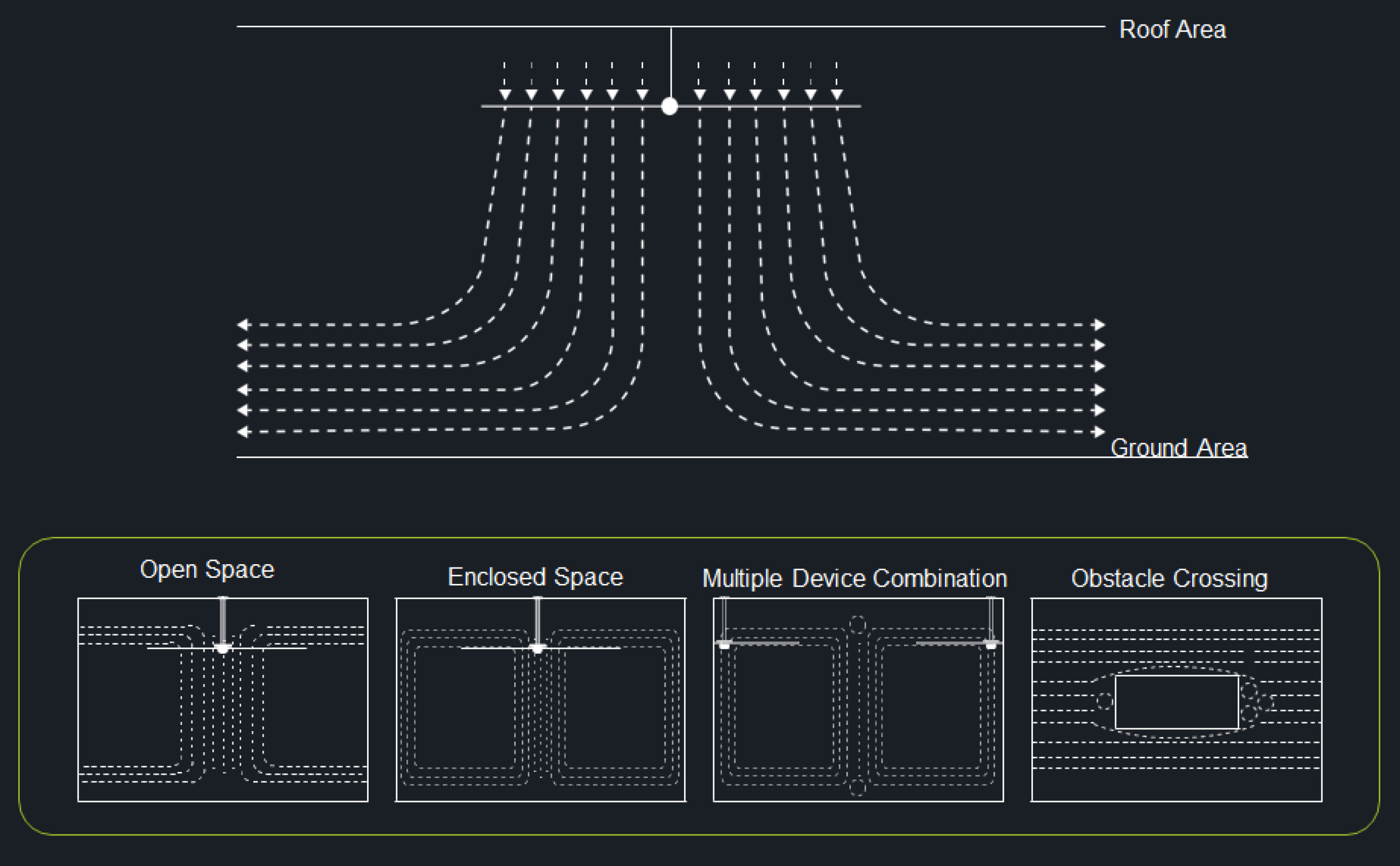
Thanks to its unique blade design and optimized power system, a single fan can cover an area of over 1,500㎡, efficiently achieving ventilation and air circulation throughout the site. With a low power consumption of just 1.5kW, the fan produces steady natural breezes that reduce perceived temperature by 5–8°C, greatly enhancing occupant comfort.
Assuming 8 hours of daily operation (industrial electricity rate: 3 CNY/kWh), the daily electricity cost is only about 36 CNY—delivering both energy efficiency and economic value.
| Item | Cooling Capacity | Initial Cost | Power Rating (kW) | Area Covered (㎡) | Yearly Energy Use | Upkeep Needs |
| Central A/C | 1500USRT/2500 | 7000000 | 1600 | 35.85 | 1200000 | Expensive |
2. Effective Air Circulation
HVLS fans address the limitations of traditional air conditioning and ventilation systems, which often fail to mix or circulate air effectively. By generating large-scale airflow, these fans promote thorough air exchange, improving indoor air quality when combined with doors, windows, or ventilation systems—resulting in a healthier, more comfortable working environment.
3. Enhanced Cooling Comfort
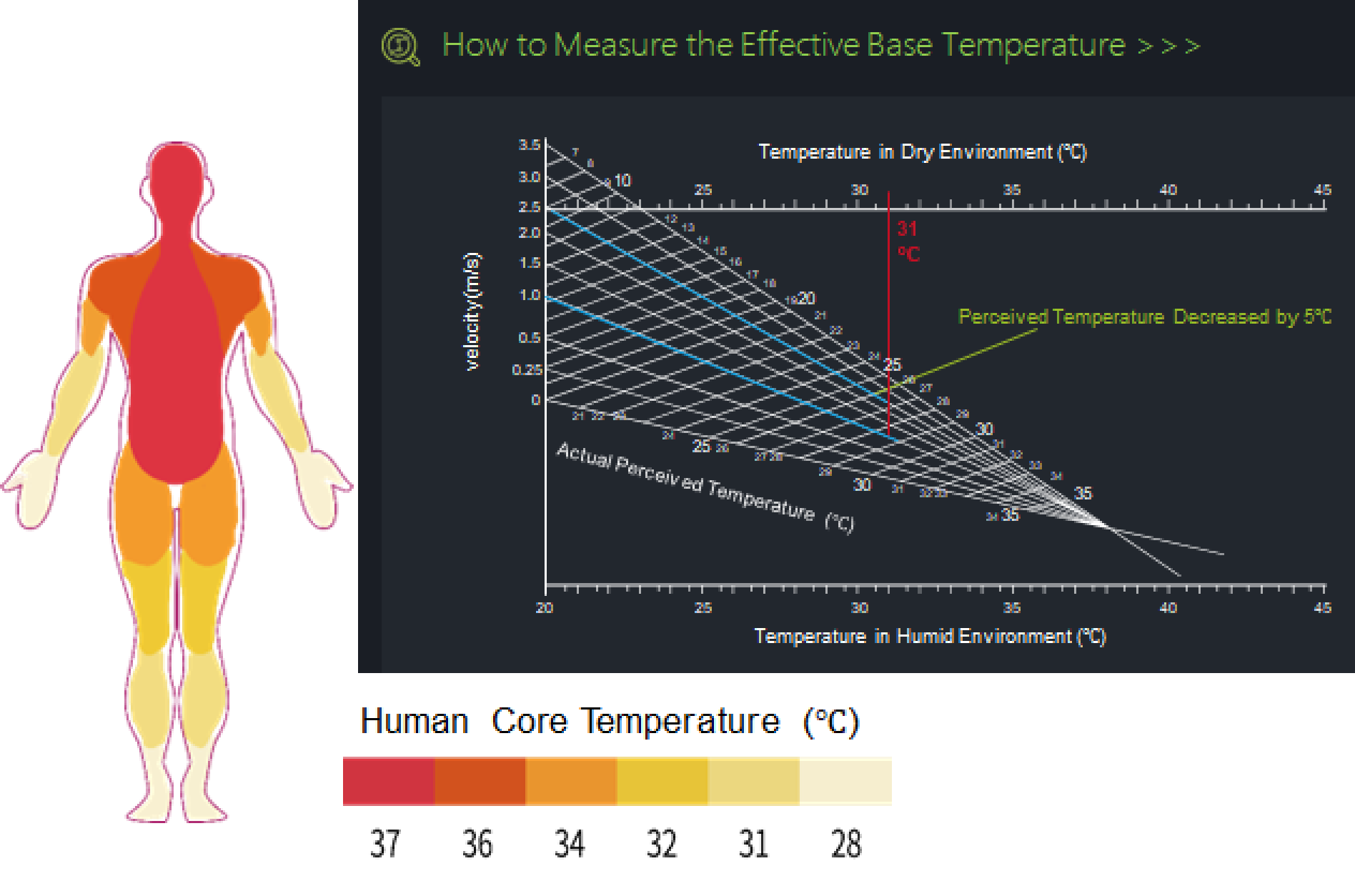
The fan produces wide, natural breezes that accelerate evaporation of sweat from the skin, creating a cooling effect that significantly improves PMV (Predicted Mean Vote) comfort index.
- Three-Dimensional Airflow: Full-area air distribution increases effective skin exposure for heat dissipation.
- Simulated Natural Wind: Gentle, dynamic breezes provide a natural and comfortable cooling sensation without pressure or discomfort.
4. Dehumidification and Odor Control
With its high-volume airflow, the fan rapidly disperses moisture and unpleasant odors, preventing condensation and reducing humidity-related corrosion risks—particularly important in packaging and logistics operations. The fan also inhibits mold growth and stagnant air, helping to maintain a dry, clean, and safe environment.
3. Energy Efficiency Comparison
▸ Compared with Traditional Fans
| Item | HVLS Energy-Saving Fan | Small Fans / Axial Flow Fans |
| Energy Consumption | Only 1.5 kW | Multiple units needed; high total power usage |
| Service Life | Up to 15 years | Approx. 2 years; frequent maintenance |
| Coverage | Over 1,500㎡ per unit | Limited coverage; more units required |
| Installation Cost | Fewer units, simplified wiring | Complex layout and higher installation workload |
▸ Compared with Air Conditioning Systems
In tall spaces, air conditioners often create thermal stratification, lowering efficiency in cooling and heating. HVLS fans running at low speeds can gently push warm air down, balancing temperatures and improving energy efficiency by over 30%.
4. Core Technology and Design
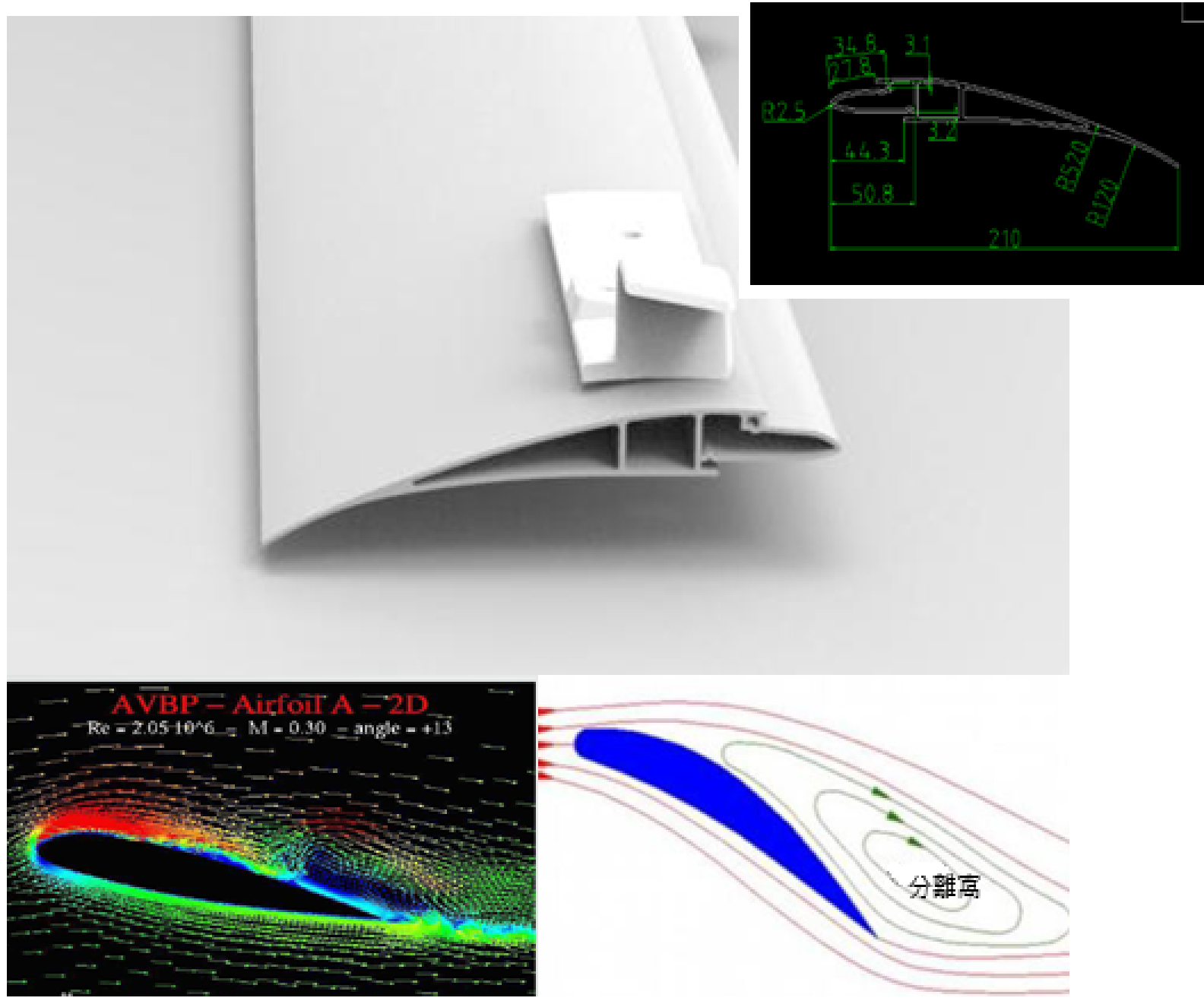
1. Unique special blade structure Technology
- Material: High-strength magnesium-aluminum alloy (AL6063) with 2.5mm thickness, providing excellent durability.
- Wide Blades: 210mm width with dual reinforcement ribs; central rib thickness up to 2mm.
- Tail Design: Unique special blade structure design with a 21° blade angle that retains airflow efficiency—higher than the industry standard of 8–10°, increasing airflow by 5%.
2. Blade Shape Optimization
- Serrated Blade Structure: Improves energy conversion efficiency and reduces turbulence and noise.
- Wide-Blade Design: Enlarges air drag surface, requiring greater material toughness and precision manufacturing.

5. Safety Features
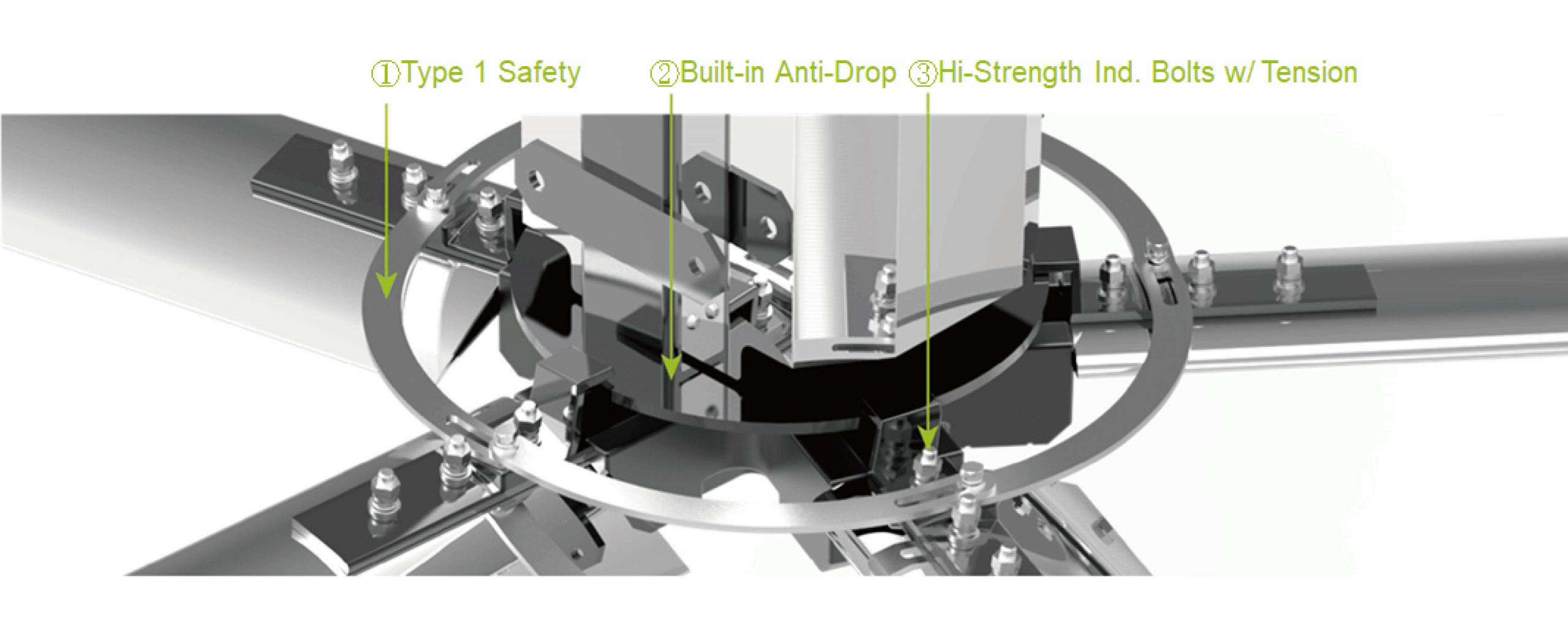
The fan is equipped with multiple layers of protection to meet industrial-grade safety standards:
| Safety Feature | Description |
| Type-I Blade Safety Ring | Integrates blades with the hub to prevent detachment |
| High-Strength Fasteners | Industrial-grade bolts with over 10x stress tolerance |
| Steel Cables | Each cable withstands 1,000 kg tensile force for dual safety |
| Imported Locking Bushing | Fenner brand; high clamping force with keyless connection |
| Overload Protection Module | Works with VFD to auto-stop and alarm during abnormal operation |
| Anti-Loosening Mechanism | Thread-locking adhesives on all bolts to prevent loosening due to vibration |
6. Application Example and Layout Recommendation
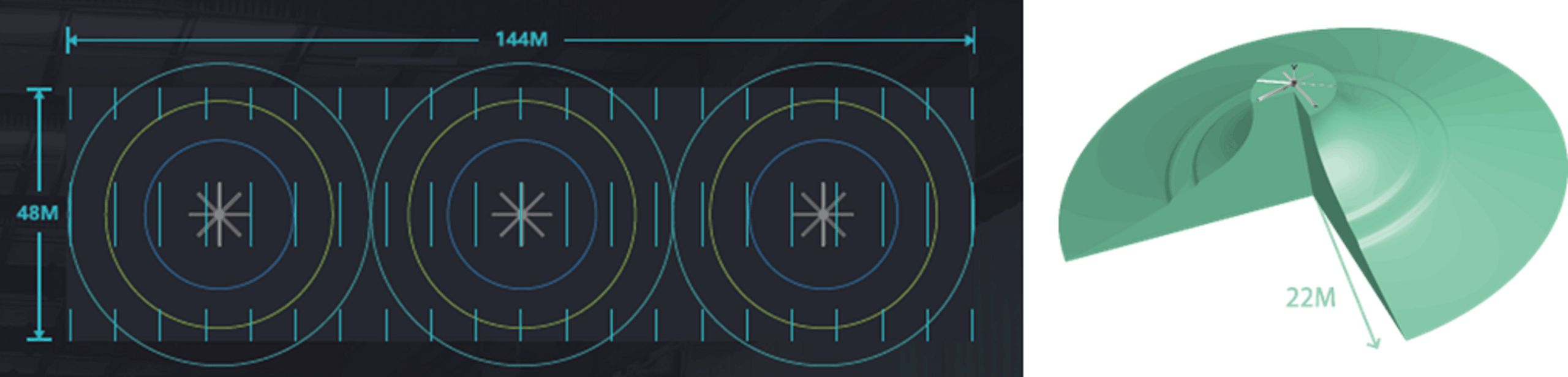
For a 3,000㎡ factory (48×144m), only three 7.3m HVLS fans are needed for full coverage. With a 40m spacing between fans and an effective coverage radius of 20m per fan, this setup ensures optimal airflow and comfort with fewer devices and simpler wiring—offering superior performance over small fans or axial units.